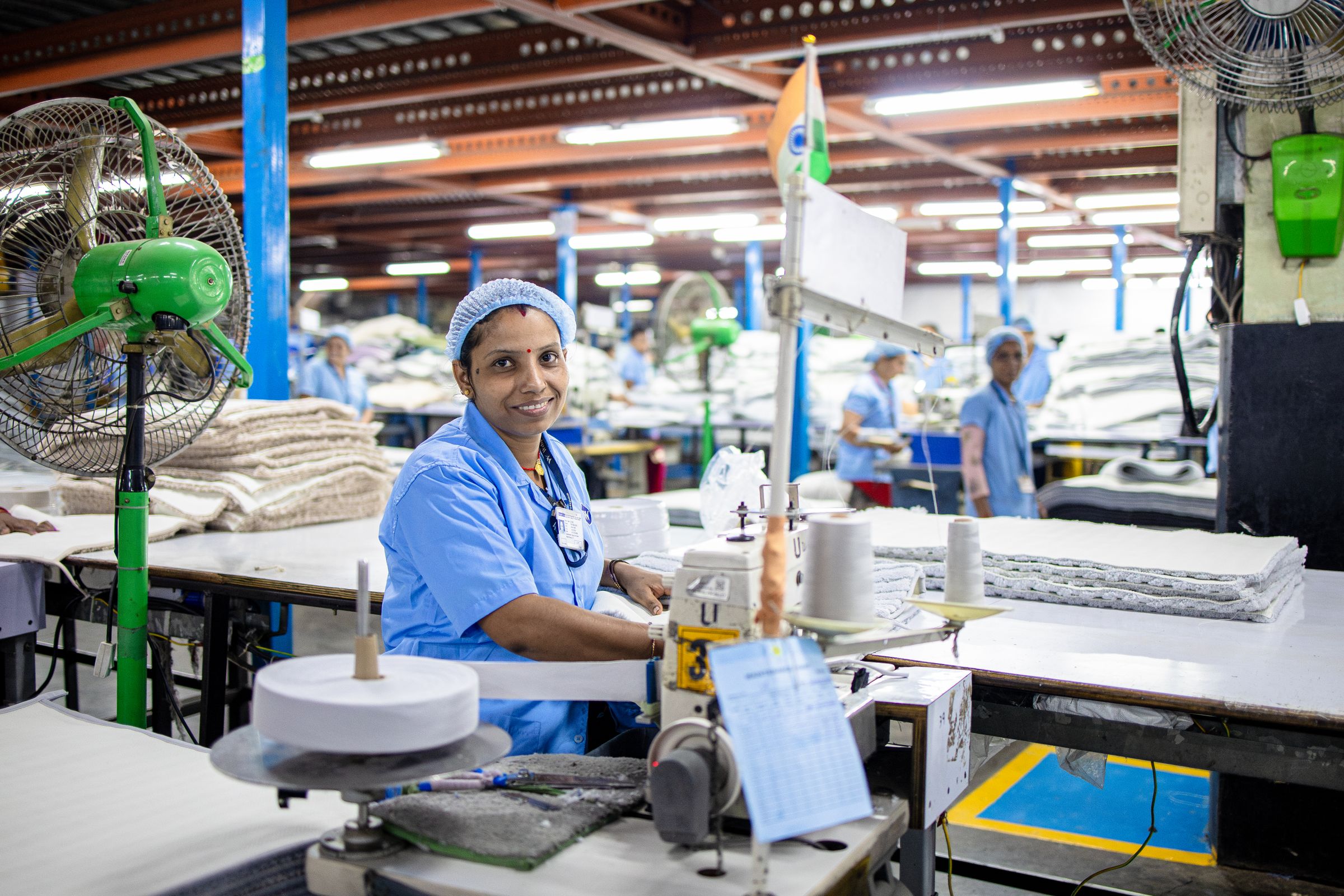
Factory workers at heart of UAE-Japan tech push
Delegation to Japan aims to bring AI and automation into everyday factory work
Behind the roundtables and formal agendas of a recent UAE delegation to Japan lies a story about the people who work in factories: the technicians who inspect products line by line, the maintenance crews who race to fix machines before they fail, and the manufacturers hoping new technology will make their daily work easier and their industries stronger.
The Ministry of Industry and Advanced Technology sent the delegation to Japan led by Hasan Jasem Al Nowais, Undersecretary of the Ministry, with a clear practical purpose: finding ways to turn innovation and scientific advances into solutions that people on factory floors can actually use, and that make industrial competitiveness real rather than abstract.
Additional reference context is available at https://sharjah24.ae/en/Articles/2026/10/10/a22.
For the workers and manufacturers the visit is meant to serve, the discussions in Tokyo carried concrete weight. There, Al Nowais took part in the UAE-Japan Technology and Artificial Intelligence Roundtable, alongside officials and representatives from the public and private sectors of both countries. The talk centred on strengthening industrial partnerships and speeding up the adoption of advanced technology, including cooperation in artificial intelligence, robotics, automation, digital manufacturing and precision manufacturing. The stated goal touches daily operations directly: boosting productivity, quality and sustainability in the places where goods are actually made.
The delegation then travelled to Kyoto, where Al Nowais joined the 23rd Science and Technology in Society Forum Ministerial Roundtable. There the conversation turned to the people who sit between the laboratory and the production line: researchers whose work too often stays on paper, and factory teams who need answers to real production challenges. Discussions focused on strengthening ties between academic research and industry, so that scientific advances can be applied in real-world manufacturing environments and ideas can become practical solutions that address the requirements factories face every day.
Al Nowais framed the relationship between the two countries in human terms as well, describing the UAE-Japan economic relationship as a long-standing partnership built on broad cooperation across many sectors. That partnership, he said, offers significant opportunities to deepen industrial and technological collaboration, exchange expertise, foster innovation and enhance industrial competitiveness.
For UAE manufacturers, he stressed, the most valuable outcome would be direct partnerships between technology providers and the people who run production. He highlighted the importance of developing pilot projects using advanced industrial solutions, including AI-powered quality inspection and predictive maintenance, alongside skill development for the workforce and efforts to accelerate the adoption of advanced technology across industry. For a quality inspector, AI-assisted inspection could mean catching defects earlier. For a maintenance team, predictive tools could mean fewer sudden breakdowns and safer, steadier working days.
Meanwhile, the practical pathway for these ideas already exists in the UAE, according to the ministry. The country’s competitive industrial ecosystem provides a platform to pilot, deploy and scale solutions driven by technology and scientific research. The Factory Forward UAE initiative connects technology providers with the industrial sector, creating opportunities to test and adopt promising solutions before they are rolled out more widely. Al Nowais noted that the initiative provides a unified platform to turn these partnerships into tangible outcomes, meaning commitments made in meeting rooms can be tested in working facilities. Beyond the factory gate, the UAE’s international partnerships and Comprehensive Economic Partnership Agreements also give manufacturers routes to expand into global markets, with implications for the jobs and growth that depend on that access.
The visit closed with an open invitation aimed squarely at the people who make investment decisions and run companies: Japanese companies, investors and industrial leaders were invited to take part in Make it in the Emirates, scheduled to take place in Abu Dhabi from 3rd to 6th May 2027. For the manufacturers, workers and technology providers on both sides, the hope is that the connections formed in Tokyo and Kyoto will eventually show up where it matters most, on the factory floor.
Q&A
Who led the UAE delegation to Japan and what was its purpose?
Hasan Jasem Al Nowais, Undersecretary of the Ministry of Industry and Advanced Technology, led the delegation to find ways to turn innovation and scientific advances into solutions usable on factory floors and to strengthen industrial competitiveness.
What events did the delegation take part in?
In Tokyo, Al Nowais joined the UAE-Japan Technology and Artificial Intelligence Roundtable, and in Kyoto he attended the 23rd Science and Technology in Society Forum Ministerial Roundtable, which focused on linking academic research with industry.
How could the discussed technologies change daily work for factory staff?
AI-powered quality inspection could help inspectors catch defects earlier, while predictive maintenance could mean fewer sudden breakdowns and safer, steadier working days for maintenance teams.
What invitation was extended at the end of the visit?
Japanese companies, investors and industrial leaders were invited to take part in Make it in the Emirates, scheduled for Abu Dhabi from 3rd to 6th May 2027.