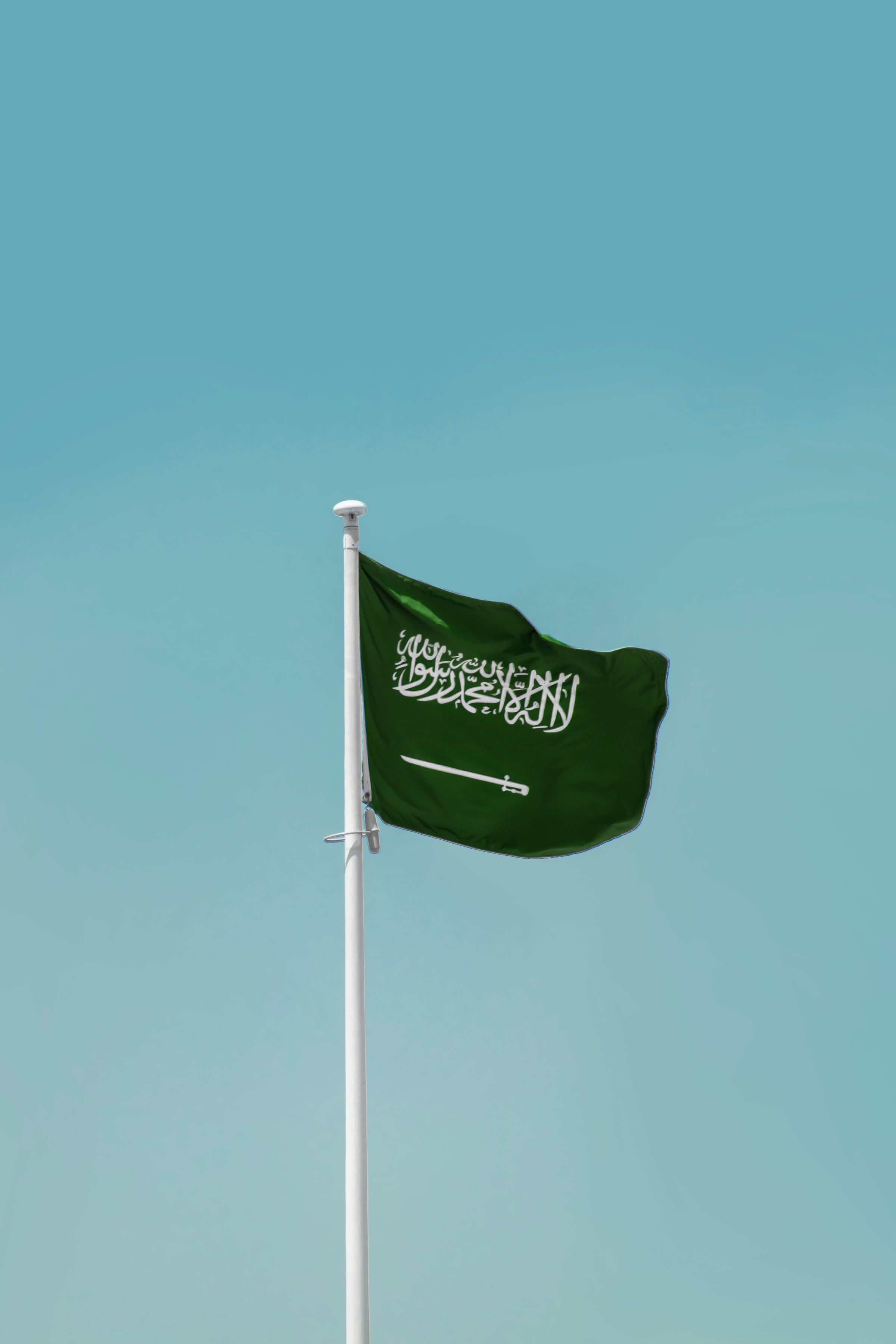
Gulf Arms Spending Comes at Cost to Citizens' Needs
Heavy military budgets strain funding for social and economic priorities
For the millions of people who live along the Persian Gulf, defense spending is not an abstract debate about military hardware. It shapes budgets that could otherwise fund economic and social priorities, and it determines how well they are protected in a region that has repeatedly proven vulnerable. Recent attacks on Gulf Arab states, despite decades of buying the most sophisticated Western systems, have laid bare a fundamental dilemma: the region remains one of the world’s most lucrative defense markets, yet its stockpiles of high-end weapons have not delivered security in the current war.
The roots of the problem go back to 1990, when the Iraqi invasion of Kuwait exposed deep weaknesses in the regional security architecture. Kuwait’s defenses collapsed within hours. The broader Gulf Arab region lacked the manpower, strategic depth, command structures, intelligence access, and early-warning capabilities needed for a collective response. The U.S.-led liberation of Kuwait demonstrated the advantages of airpower, stealth, and sophisticated communications, and in 2003, the American speed in overrunning Baghdad convinced Gulf Arab leaders that technological superiority, precision guided munitions, and intelligence could offset their demographic and geostrategic vulnerabilities. The result was a wave of multibillion-dollar bilateral defense agreements with the United States, the United Kingdom, and France.
The scale of that spending is striking. Data from the Stockholm International Peace Research Institute show that the six Gulf Arab states accounted for almost 20 percent of global imports of major arms during 2021-25. Saudi Arabia alone took 6.8 percent, Qatar 6.4 percent, and Kuwait 2.8 percent. In 2025, Saudi Arabia spent $83.2 billion on its military, 6 percent of its gross domestic product, making it the world’s eighth-largest military spender, while Kuwait spent an estimated $8.1 billion, or 4.7 percent of its GDP. These states face real threats and cannot simply sideline defense spending. At the same time, they face fiscal pressure to sustain their national vision agendas, and balancing the two is critical for state and regime security alike.
The dependence itself is lopsided. Between 2021 and 2025, 77 percent of Saudi Arabia’s, 62 percent of Kuwait’s, 48 percent of Qatar’s, and 42 percent of the United Arab Emirates’ major arms imports came from the United States. For Washington, these transfers were never merely commercial; they were an extension of national security, foreign policy, and economic security. Contractors deepened institutional ties while locking Gulf customers into decades of training, ammunition, maintenance, interoperability, and upgrades.
Yet the decades since have shown that expensive, high-tech weapons carry vulnerabilities that asymmetric responses can exploit or bypass. The Ukraine war was an eye-opener: inexpensive drones, electronic warfare, rapid innovation, and the capacity to replace equipment at scale can render the most sophisticated systems ineffective. That lesson is pushing the Gulf Arab states to diversify their suppliers. China offers expanding economic ties, select military capabilities, and infrastructural support, though it does not yet seek to be a security guarantor for the Gulf Cooperation Council states. Turkey’s defense industry offers access to unmanned systems and new procurement models; Pakistan provides military training and strategic cooperation; India supplies missiles, air defense, rockets, radars, electronic warfare, and naval systems; and Ukraine offers battlefield experience in counter-drone warfare and scalable defense technologies.
Meanwhile, Washington’s calculation involves retaining strategic influence, protecting its defense-industrial base, and preventing China, Turkey, or any other external power from dominating the region’s security. The current war with Iran has revealed the limits of relying on permanent force deployments, military bases, and overdependence on American technology. What the Gulf states ultimately need is a security architecture in which different technologies work together: early warning, intelligence, command-and-control, interoperability, and sustainable replenishment. Their next security revolution will depend less on buying the most sophisticated weapons and more on assessing needs and affordability. The strategic imperative for Washington is to build a Gulf that needs American partnership for security, but not American protection for survival, even as the Gulf Arab states confront their more recalcitrant neighbors.
Q&A
Why does Gulf arms spending matter to ordinary citizens?
Defense spending shapes budgets that could otherwise fund economic and social priorities, and it determines how well residents are protected in a region that has repeatedly proven vulnerable.
How large is the region's share of global arms imports?
The six Gulf Arab states accounted for almost 20 percent of global imports of major arms during 2021-25, with Saudi Arabia at 6.8 percent, Qatar 6.4 percent, and Kuwait 2.8 percent.
How much did Saudi Arabia and Kuwait spend on their militaries?
In 2025, Saudi Arabia spent $83.2 billion on its military, about 6 percent of its GDP, while Kuwait spent an estimated $8.1 billion, or 4.7 percent of its GDP.
What lesson did the Ukraine war and the current war with Iran teach about high-tech weapons?
Inexpensive drones, electronic warfare, rapid innovation, and the ability to replace equipment at scale can render the most sophisticated high-end systems ineffective, a lesson reinforced by the Ukraine war and the current war with Iran.